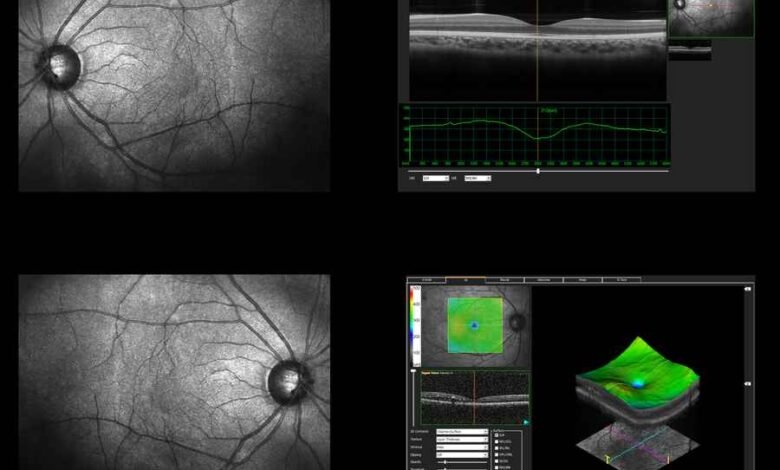
The odac eye test meaning is a term many patients in the UK come across during routine eye examinations, especially when advanced diagnostic technology is used. It often appears on reports or appointment summaries, leaving people unsure whether it refers to a specific medical test or a technical abbreviation. In most cases, the odac eye test meaning is linked to eye examination systems and documentation used by opticians rather than a standalone clinical procedure.


Understanding the odac eye test meaning is important because modern eye care now includes multiple layers of testing beyond simple vision checks. Opticians increasingly rely on digital imaging and scanning tools, which produce detailed reports containing abbreviations and coded references. This can easily cause confusion for patients, especially when they see unfamiliar terms alongside OCT scans or retinal images. Learning what the odac eye test meaning represents helps patients feel more informed and confident about their eye health assessments.
Odac eye test meaning explained in simple terms
The odac eye test meaning is not a separate eye examination in itself, but rather a term that is often associated with optometric reporting systems or internal clinic terminology. Patients may notice it printed on their results after a visit to an optician, which leads to the assumption that it is a diagnostic procedure. In reality, the odac eye test meaning is generally linked to administrative or classification systems used during eye testing.
When discussing the odac eye test meaning, it is essential to recognise how modern optometry clinics operate. Eye health data is now recorded digitally, allowing opticians to track patient history and scan results more efficiently. These systems often use abbreviations to categorise different parts of an eye examination. As a result, ODAC can appear in reports even though the actual medical test being performed is something more widely recognised, such as an OCT scan.
Understanding OCT eye scans and their importance
To fully understand the odac eye test meaning, it is necessary to look at OCT technology, which stands for Optical Coherence Tomography. This advanced scanning method uses light waves to capture highly detailed cross-sectional images of the retina. Unlike a standard eye test that focuses on vision clarity, OCT allows opticians to examine the internal structures of the eye with exceptional precision.
The odac eye test meaning becomes clearer when patients realise that OCT is the clinically significant part of modern eye diagnostics. This scan helps detect early signs of serious conditions before symptoms become noticeable. It is painless, quick, and non-invasive, making it one of the most valuable tools in preventive eye care. Many UK opticians now include OCT scans as part of enhanced eye examinations.
How an OCT eye test works step by step
The OCT eye test works by using a specialised scanning device that captures detailed images of the retina in seconds. During the procedure, the patient simply sits in front of the machine and focuses on a light while the scanner does the rest. There is no contact with the eye, and the process is completely painless and safe for all age groups.
Understanding the odac eye test meaning alongside this process helps patients realise that the abbreviation is not the test itself but part of the reporting environment. Once the scan is completed, the optician analyses high-resolution images that reveal each layer of the retina. This allows them to identify even the smallest changes in eye structure that may indicate early disease.
Conditions detected through OCT scanning
OCT scans are highly effective in detecting a wide range of eye conditions at an early stage. These include glaucoma, macular degeneration, diabetic retinopathy, and other retinal disorders that can lead to vision loss if untreated. Early detection is critical because many of these conditions develop slowly and without obvious symptoms.
The odac eye test meaning is often searched by patients who have been recommended an OCT scan and want to understand its purpose. OCT technology provides detailed insight into the health of the retina, allowing opticians to monitor changes over time. This makes it an essential tool for long-term eye care, especially for individuals at higher risk of eye disease.
Odac eye test meaning versus OCT differences
The odac eye test meaning is frequently confused with OCT, but they are not the same thing. OCT is an advanced imaging scan used to examine the retina, while ODAC is typically an internal label or reference used in clinical systems. This distinction is important because patients may otherwise misinterpret their eye test results.
Clarifying the odac eye test meaning helps patients understand what information is medically relevant. OCT results provide actual diagnostic images, whereas ODAC references are usually part of record-keeping or administrative categorisation. Recognising this difference ensures that patients focus on meaningful clinical findings rather than technical abbreviations that do not affect diagnosis.
Who should have an OCT eye scan
OCT eye scans are recommended for individuals who may be at higher risk of developing eye conditions. This includes people over the age of 40, those with diabetes, a family history of glaucoma, or anyone experiencing changes in vision. Regular OCT scans can help detect problems early, even before symptoms appear.
The odac eye test meaning often appears in discussions around routine eye check-ups, especially when opticians suggest additional testing. In many UK clinics, OCT is offered as part of an enhanced eye examination. This proactive approach allows for early intervention, which can significantly reduce the risk of long-term vision loss.
Benefits of OCT technology in eye health
One of the key benefits of OCT scanning is its ability to provide highly detailed images without discomfort or risk. It allows opticians to examine the retina layer by layer, offering insights that are not possible with standard vision tests. This level of precision is essential for detecting subtle changes in eye health.
Understanding the odac eye test meaning alongside OCT benefits helps patients appreciate how advanced modern eye care has become. OCT technology supports early diagnosis, better treatment planning, and ongoing monitoring of eye conditions. It plays a crucial role in protecting vision and improving long-term eye health outcomes.
Conclusion on odac eye test meaning and eye scans
The odac eye test meaning can initially seem confusing, especially when seen on eye test reports without explanation. However, it is not a separate medical procedure but rather a term linked to modern optometric systems and reporting structures. The real focus of advanced eye care is the OCT scan, which provides detailed insights into retinal health.
By understanding the odac eye test meaning, patients can feel more confident when attending eye appointments and reviewing their results. OCT technology remains one of the most important advancements in optometry, helping detect serious conditions early and ensuring better protection of vision over time.